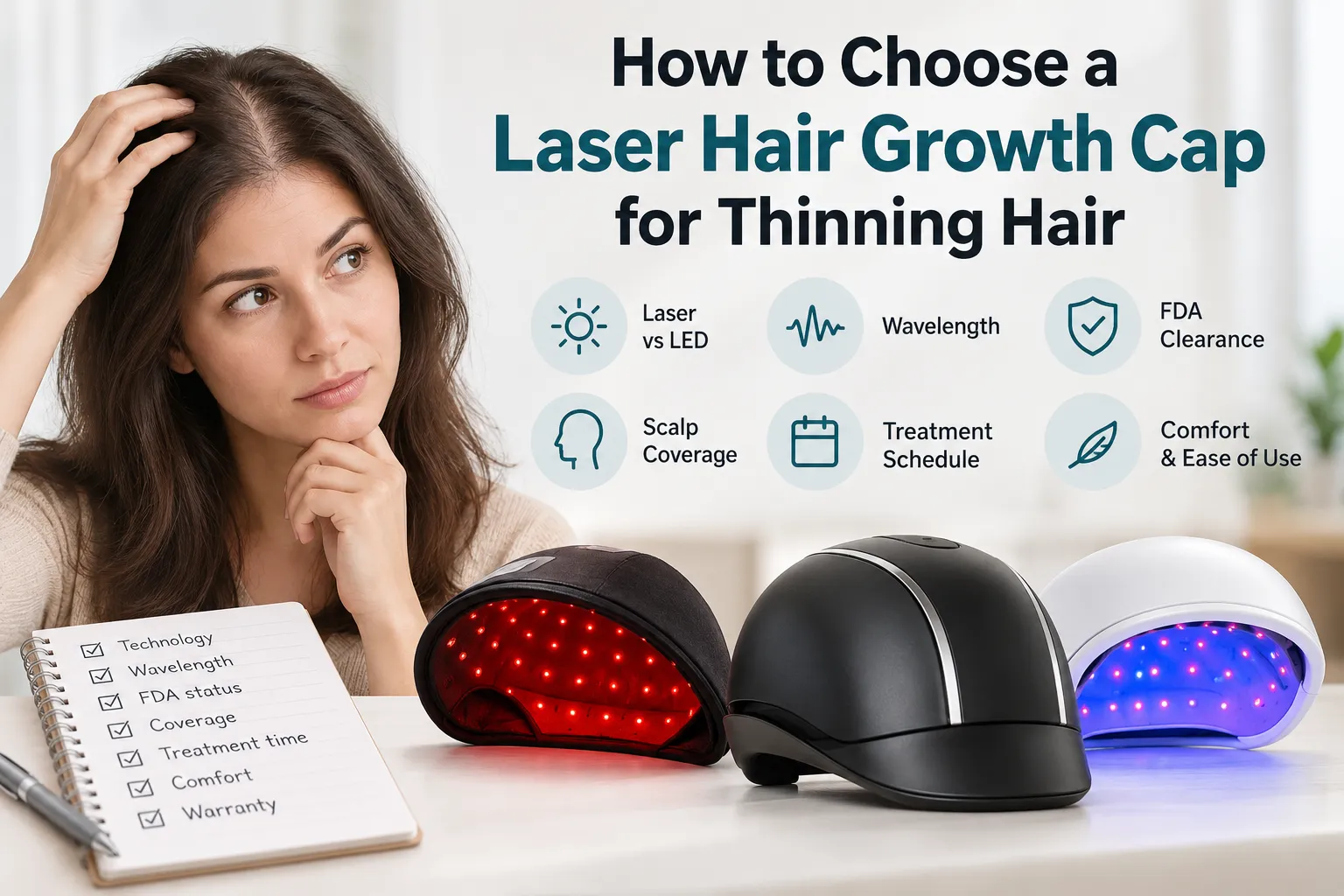
How to Choose a Laser Hair Growth Cap for Thinning Hair
If you’re noticing thinning hair and considering an at-home laser hair growth cap, choosing between the available devices can be confusing. Different products may use different light technologies, wavelengths, coverage areas, treatment schedules and designs.
Rather than choosing a device based only on price or the number of lights it contains, it’s important to understand what to look for in a laser hair growth cap and which features actually matter for your needs.
In this guide, we’ll explain the key factors to consider before buying a laser hair growth cap for thinning hair, including laser vs LED technology, FDA clearance, wavelength, scalp coverage, treatment routine and ease of use.
Quick Answer: What Should You Look for in a Laser Hair Growth Cap?
When comparing laser hair growth caps, look beyond marketing claims. Consider the type of light technology, wavelength, scalp coverage, treatment schedule, device fit and comfort, safety information, and FDA clearance status when applicable.
The best choice depends on your type of hair thinning, how consistently you can follow the treatment routine and whether the device provides clear information about its technology and intended use.
1. Check Whether It Uses Laser or LED Technology
One of the first things to check is the type of light technology used by the device. Hair growth caps may use laser diodes, LEDs, or a combination of light sources.
These technologies should not automatically be considered interchangeable. When comparing devices, look for clear information about the light source, wavelength, intended use and treatment protocol rather than assuming that a higher number of lights means a better device.
If you want to understand this difference in more detail, read our Laser vs LED Hair Growth Devices Guide →.
2. Look at the Wavelength — Not Just the Number of Diodes
When comparing laser hair growth caps, you may see manufacturers emphasize the number of diodes or lights in the device. While coverage matters, diode count alone does not tell you everything about how a device is designed to be used.
Also look for information about the wavelength, light source, scalp coverage and recommended treatment schedule. These specifications provide more useful context than relying on diode count alone.
3. Check the Scalp Coverage
A hair growth cap should provide coverage that matches the areas you want to target. Someone experiencing general thinning across the top of the scalp may have different coverage needs from someone mainly concerned about a specific area.
Before buying, check how the device is designed to distribute light across the scalp and whether its fit allows you to use it comfortably and consistently.
4. Understand What “FDA-Cleared” Means
If you are shopping for a hair growth device in the United States, you may see terms such as FDA-cleared, FDA-approved or FDA-registered. These terms do not mean the same thing.
For certain hair growth devices, FDA clearance generally means that the device has gone through the applicable FDA premarket review process and was found substantially equivalent to a legally marketed predicate device for its cleared intended use.
Before buying, check the exact claims made for the device and avoid assuming that terms such as “FDA registered” automatically mean the product itself is FDA-cleared.
Want to understand this before choosing a device? Read our FDA-Cleared Laser Hair Growth Caps Buying Guide →.
5. Consider the Treatment Schedule
A hair growth cap is not a one-time treatment. When comparing devices, check the manufacturer's recommended session length and frequency of use.
A device may look impressive on paper, but if its routine is difficult to maintain, consistent use may become challenging. Consider whether the treatment schedule realistically fits your lifestyle before buying.
6. Think About Comfort and Ease of Use
Comfort matters because hair growth devices are designed to be used repeatedly over time. Look at factors such as the device's fit, weight, controls, portability and whether you can comfortably incorporate it into your routine.
A convenient design does not determine effectiveness by itself, but it can make it easier to follow the recommended treatment schedule consistently.
7. Be Realistic About Hair Growth Claims
Be cautious with products promising instant regrowth or guaranteed results. Hair thinning can have different causes, and no at-home light-based device is appropriate for every type of hair loss.
Results can vary between individuals, and hair growth treatments generally require consistency and time. If you are experiencing sudden, severe or unexplained hair loss, consider speaking with a qualified healthcare professional before choosing an at-home device.
How to Compare Laser Hair Growth Caps Before Buying
Before choosing a laser hair growth cap, compare the specifications and practical features side by side. A higher price or a larger diode count does not automatically mean that one device is the right choice for you.
| What to Check | Why It Matters |
|---|---|
| Light Technology | Check whether the device uses laser diodes, LEDs, or a combination of light sources. |
| Wavelength | Look for clearly stated wavelength specifications rather than relying only on marketing claims. |
| FDA Status | If FDA clearance is claimed, verify exactly what the manufacturer or seller says is cleared and for which intended use. |
| Scalp Coverage | Consider whether the design provides coverage for the areas where you are experiencing thinning. |
| Treatment Schedule | Check session length and recommended frequency to make sure the routine is realistic for you. |
| Comfort & Fit | A comfortable device may make it easier to follow the recommended routine consistently. |
| Warranty & Returns | Review the seller's current warranty and return policy before purchasing. |
Which Laser Hair Growth Cap Should You Choose?
The right device depends on your needs and the type of hair thinning you are experiencing. Instead of looking for the product with the biggest numbers or the strongest marketing claims, look for a device that clearly explains its technology, intended use, treatment routine and safety information.
A useful buying decision should consider the complete picture: light technology, wavelength, scalp coverage, FDA status when applicable, treatment schedule, comfort and seller support.
Considering a Laser Hair Growth Cap? Meet LaserRevive™ 82
If you are looking for an at-home device that meets several of the buying criteria discussed above, the BlissGlows LaserRevive™ 82 is a cordless laser hair growth helmet designed for a convenient, hands-free routine.
LaserRevive™ 82 features 82 laser diodes operating at 650nm ±5nm, with 5mW output per laser diode. The Hat-01 device received FDA 510(k) clearance under K232356 for its specified indications.
LaserRevive™ 82 at a Glance
- Light technology: 82 laser diodes
- Wavelength: 650nm ±5nm
- Output: 5mW per laser diode
- FDA 510(k): K232356
- Modes: Continuous and Pulse
- Recommended routine: 30 minutes, 3 times per week
- Design: Cordless, rechargeable and hands-free
- Weight: Approximately 484g
The FDA-cleared indication applies to qualifying males and females with androgenetic alopecia within the classifications specified in the device clearance. It should not be interpreted as meaning the device is intended for every type or cause of hair loss.
Frequently Asked Questions About Laser Hair Growth Caps
Do laser hair growth caps work for thinning hair?
Low-level light and laser therapy has been studied for certain types of hair loss, particularly androgenetic alopecia. However, results vary between individuals, and a laser hair growth cap should not be considered suitable for every cause of thinning hair.
If your hair loss is sudden, unexplained or associated with other symptoms, consider speaking with a qualified healthcare professional before choosing an at-home device.
How long does it take to see results from a laser hair growth cap?
Hair growth is a gradual process, so these devices are designed for consistent use over time rather than immediate results. The expected treatment period varies by device and individual, so follow the manufacturer's recommended schedule and evaluate progress over an appropriate period rather than expecting changes after only a few sessions.
Are more laser diodes always better?
Not necessarily. Diode count is only one specification. When comparing devices, also consider the type of light source, wavelength, output, scalp coverage, treatment protocol and the evidence or regulatory information associated with the device.
What wavelength should I look for in a laser hair growth cap?
Different hair growth devices may use different wavelengths. Rather than choosing a device based on a wavelength number alone, check whether the manufacturer clearly identifies the wavelength, light source, intended use and treatment protocol.
Is FDA-cleared the same as FDA-approved?
No. “FDA-cleared” and “FDA-approved” are different regulatory terms. Many medical devices reach the U.S. market through the FDA 510(k) clearance pathway rather than an FDA approval process.
For more information, read our FDA-Cleared Laser Hair Growth Caps Buying Guide →.
Is laser better than LED for hair growth?
Laser and LED devices use different light sources, and the light source alone is not enough to determine which device is appropriate for you. Consider the complete device specifications, intended use, treatment protocol and available evidence.
See our Laser vs LED Hair Growth Devices Guide → for a more detailed comparison.
Can women use laser hair growth caps?
Some laser hair growth devices have indications that include qualifying women with androgenetic alopecia, while others may have different intended uses. Always check the specific device's labeling and eligibility information rather than assuming that every laser cap is intended for every type of female hair loss.
Final Checklist Before Buying a Laser Hair Growth Cap
Before purchasing, make sure you can answer these questions:
- Does the device use laser, LED or a combination?
- Are its wavelength and technical specifications clearly stated?
- Does it provide appropriate scalp coverage for your needs?
- Is its FDA status clearly explained and verifiable, when applicable?
- Can you realistically follow the recommended treatment schedule?
- Is the device comfortable and convenient enough for regular use?
- Are the return policy, warranty and seller information clear?
Taking time to compare these factors can help you make a more informed choice instead of relying on a single specification or marketing claim.
If you are considering a laser-based option, you can view the BlissGlows LaserRevive™ 82 specifications here →.