Laser vs LED Hair Growth Devices: What’s the Difference?
Laser vs LED Hair Growth Devices: What’s the Difference?
Laser and LED hair growth devices may look similar, but they use different light-source technologies. Laser hair growth devices use laser diodes that produce focused, directional light, while LED hair growth devices generally use broader, more dispersed light.
Both technologies can use red light as part of an at-home hair care routine, but wavelength, light-source configuration, scalp coverage, treatment schedules, and device specifications can vary significantly. In this guide, we compare laser vs LED for hair growth and explain what to consider when choosing an at-home hair growth device.
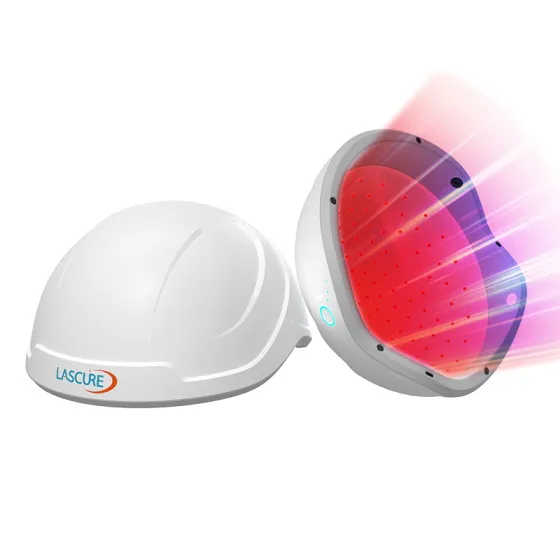
What Is the Difference Between Laser and LED Hair Growth Devices?
What Is the Difference Between Laser and LED Hair Growth Devices?
The main difference between laser and LED hair growth devices is the type of light source they use. Laser diodes produce a more focused and directional beam of light, while LEDs generally emit light over a broader area.
Both technologies can operate within the red-light spectrum, but devices can differ significantly in wavelength, number of light sources, power output, scalp coverage, and recommended treatment schedule.
This is why it is important to compare the specifications of the actual device rather than choosing a product based only on whether it is described as “laser” or “LED.”
How Do Laser Hair Growth Devices Work?
How Do Laser Hair Growth Devices Work?
Laser hair growth devices use low-level laser diodes to deliver controlled light to the scalp. Depending on the design, multiple laser diodes may be distributed across a helmet or cap to provide hands-free coverage over different areas of the scalp.
Specifications vary between devices, so factors such as wavelength, diode count, treatment duration, and recommended frequency should always be checked for the specific model.
How Do LED Hair Growth Devices Work?
How Do LED Hair Growth Devices Work?
LED hair growth devices use light-emitting diodes to deliver red light across the scalp. Unlike laser diodes, LEDs generally produce a broader and more dispersed light output.
LED technology can be found in caps, helmets, combs, and other scalp-care devices. As with laser devices, specifications can vary considerably, including wavelength, number of LEDs, treatment area, session duration, and recommended frequency of use.
For a different approach to at-home scalp care, the BlissGlows ScalpRevive™ combines red & blue light with gentle vibration massage and a built-in serum or oil applicator. Explore the BlissGlows ScalpRevive™ Scalp Massager with Serum Applicator →
Laser vs LED Hair Growth Devices: Key Differences
Laser vs LED Hair Growth Devices: Key Differences
- Light Source: Laser diodes vs LEDs
- Light Output: More focused and directional vs broader and more dispersed
- Device Configuration: Varies depending on the number and placement of light sources
- Wavelength: Both may use red-light wavelengths depending on the device
- Treatment Schedule: Depends on the manufacturer and specific model
- Regulatory Status: Must be verified for the exact device
Is Laser Better Than LED for Hair Growth?
Is Laser Better Than LED for Hair Growth?
Neither technology should be judged solely by the terms “laser” or “LED.” The performance and intended use of a hair growth device depend on its complete design, including wavelength, light source configuration, power output, scalp coverage, treatment protocol, and regulatory status.
Laser diodes produce more focused and directional light, while LEDs generally provide broader and more dispersed illumination. When comparing devices, consumers should therefore evaluate the specifications and supporting information for the specific product rather than assuming that one technology is automatically better in every situation.
What Should You Look for When Choosing a Hair Growth Device?
What Should You Look for When Choosing a Hair Growth Device?
- Light Source: Check whether the device uses laser diodes, LEDs, or a combination of both.
- Wavelength: Review the wavelength specified by the manufacturer.
- Number of Light Sources: Check how many lasers or LEDs are distributed across the treatment area.
- Scalp Coverage: Consider how effectively the design covers the areas you want to treat.
- Treatment Schedule: Review the recommended session duration and weekly frequency.
- Comfort and Convenience: Consider weight, cordless operation, battery life, and hands-free use.
- Regulatory Status: If a device claims FDA 510(k) clearance, verify that the clearance corresponds to the specific device.
An Example: BlissGlows LaserRevive™ 82
An Example: BlissGlows LaserRevive™ 82
The BlissGlows LaserRevive™ 82 is an at-home laser hair growth helmet featuring 82 laser diodes operating at a wavelength of 650nm ±5nm. Unlike LED-only devices, LaserRevive™ 82 uses dedicated laser diodes distributed across the helmet for hands-free scalp coverage.
The device features a rechargeable 3800mAh battery, continuous and pulse operating modes, and a 30-minute treatment session. The manufacturer recommends using the device three times per week.
For consumers comparing laser and LED hair growth devices, LaserRevive™ 82 provides an example of a cordless helmet designed around dedicated laser-diode technology.
Frequently Asked Questions About Laser vs LED Hair Growth Devices
Frequently Asked Questions About Laser vs LED Hair Growth Devices
What Is the Main Difference Between Laser and LED Hair Growth Devices?
What Is the Main Difference Between Laser and LED Hair Growth Devices?
Do Laser and LED Hair Growth Devices Use the Same Wavelength?
Do Laser and LED Hair Growth Devices Use the Same Wavelength?
Is a Higher Diode Count Always Better?
Is a Higher Diode Count Always Better?
Can You Use a Laser or LED Hair Growth Device Every Day?
Can You Use a Laser or LED Hair Growth Device Every Day?
How Do I Choose Between a Laser and LED Hair Growth Device?
How Do I Choose Between a Laser and LED Hair Growth Device?
Making the Right Choice for Your At-Home Hair Care Routine
Making the Right Choice for Your At-Home Hair Care Routine
Laser and LED hair growth devices use different light-source technologies, and the specifications can vary significantly from one product to another. Rather than focusing only on whether a device uses lasers or LEDs, consider factors such as wavelength, number and type of light sources, scalp coverage, treatment schedule, comfort, and regulatory information.
Understanding these differences can help you compare at-home hair growth devices more effectively and choose a product that fits your needs and routine.