How to Choose the Right At-Home Beauty Device: A Practical Face, Skin & Hair Buying Guide
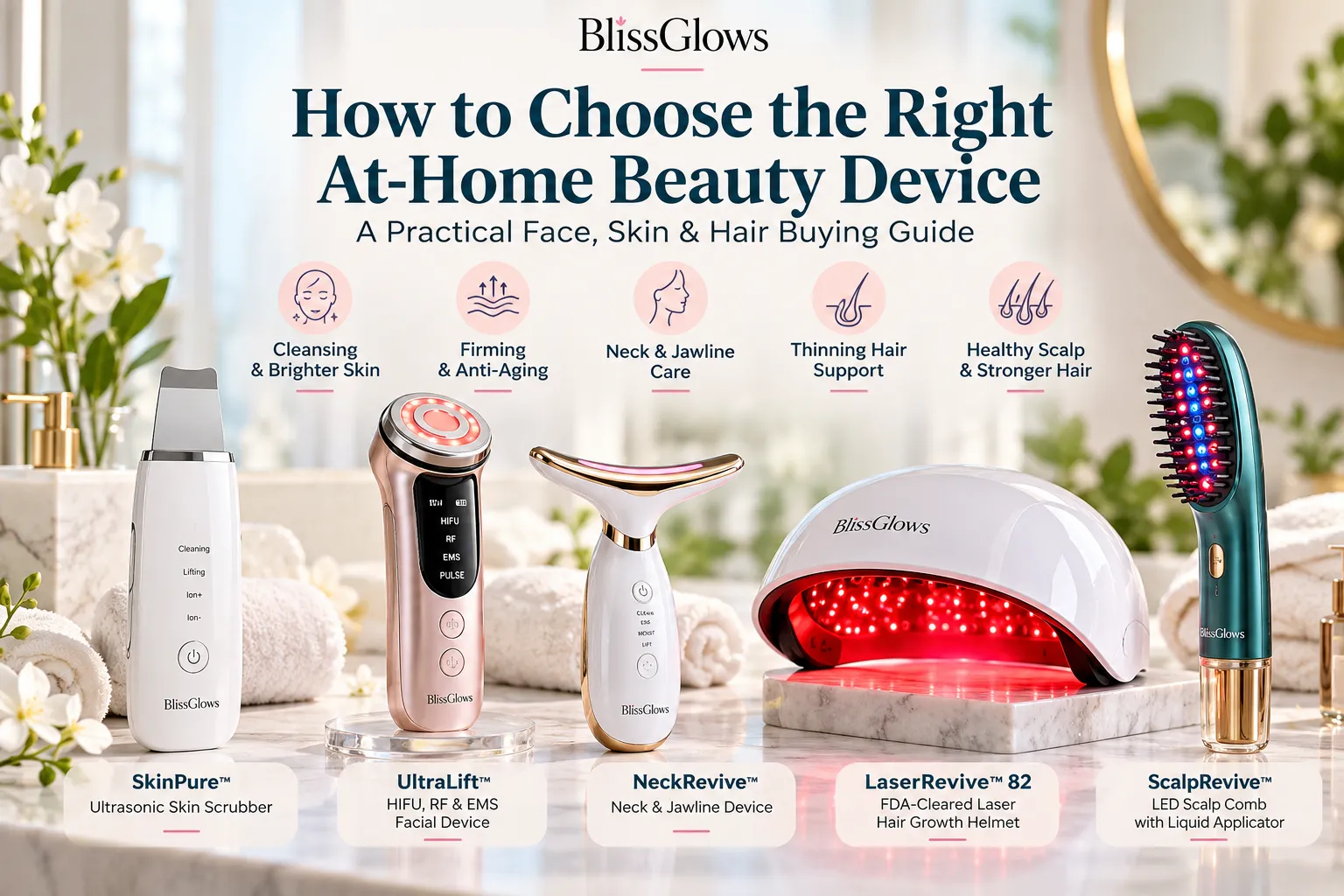
Looking for an at-home beauty device but unsure where to start?
With so many facial tools, light-based devices, and hair-care gadgets available, choosing the right one can feel overwhelming.
The most important question isn't "Which device is the most advanced?" It's "Which device is most appropriate for my beauty goal?"
This practical buying guide explains common home beauty technologies, what to check before purchasing, and how to find a device that fits your needs and routine.
Quick Guide: Choose by Your Beauty Goal
| Your Beauty Goal | Device to Explore | What to Check |
|---|---|---|
| Facial cleansing | Ultrasonic skin scrubber | Skin compatibility and instructions |
| Facial firming routine | RF, microcurrent, EMS or HIFU | Technology, precautions and intended use |
| Neck and jawline care | Targeted beauty device | Treatment area and contraindications |
| Thinning hair | Laser hair growth device | Hair-loss cause, FDA status and specifications |
| Everyday scalp care | LED scalp comb and massage | Light source, cleaning and serum compatibility |
1. Start With Your Beauty Concern
Beauty devices use different technologies to address different needs. A facial cleansing tool is not interchangeable with a device intended for skin firming.
Similarly, a scalp massage comb should not automatically be considered equivalent to a laser device intended for hair regrowth.
Before buying, identify your primary concern, review the product's intended use and decide how often you can realistically use it.
2. Understanding At-Home Beauty Technologies
Ultrasonic Facial Cleansing
Ultrasonic skin scrubbers use rapid vibration and a spatula-shaped head as part of a facial cleansing routine.
They may help remove surface buildup when used correctly. Gentle technique and the manufacturer's instructions are important.
Explore: BlissGlows SkinPure™ Ultrasonic Skin Scrubber
RF, Microcurrent, EMS and HIFU
Radiofrequency (RF), microcurrent, electrical muscle stimulation (EMS) and high-intensity focused ultrasound (HIFU) are different technologies.
RF uses radiofrequency energy. Microcurrent and EMS involve electrical stimulation, while HIFU uses focused ultrasound.
Their applications, safety considerations and supporting evidence vary by device.
A home device should not be assumed to produce the same results as a professional clinic treatment simply because it uses the same technology name.
Learn more in our HIFU vs RF vs EMS Guide .
Explore: BlissGlows UltraLift™ Facial Device
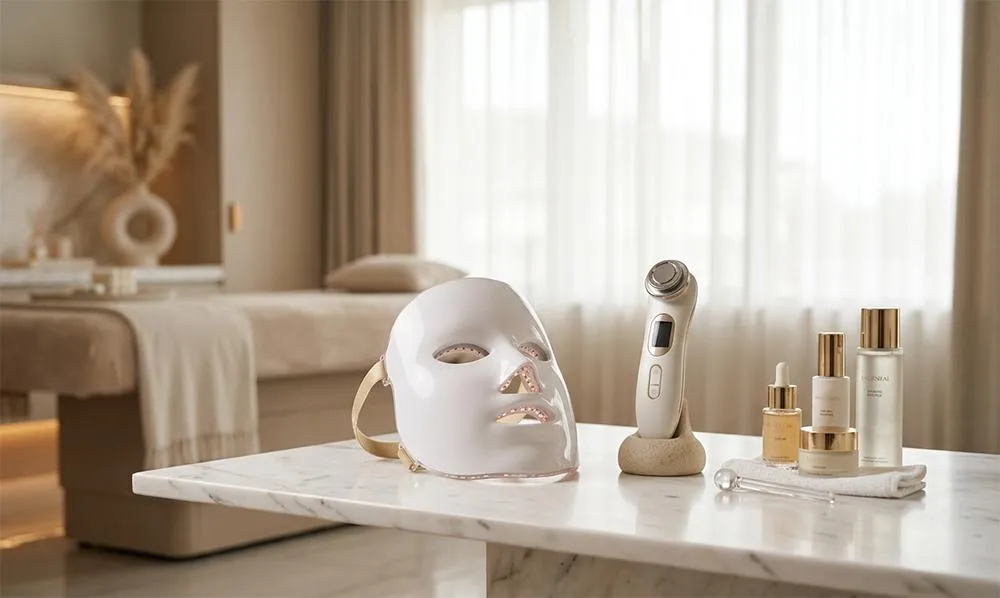
Red and Blue LED Light
LED beauty devices emit light at selected wavelengths. Their intended uses depend on the device, the treatment area and the manufacturer's instructions.
Red light is commonly explored in skincare routines, while blue light is used in certain devices designed for specific skin concerns.
However, not every LED device is intended for the same purpose. A red-light feature alone is not proof of wrinkle reduction or hair regrowth.
Before choosing an LED beauty device, check the wavelengths, treatment instructions, eye-safety guidance and the manufacturer's claims.
Laser Hair Growth Devices
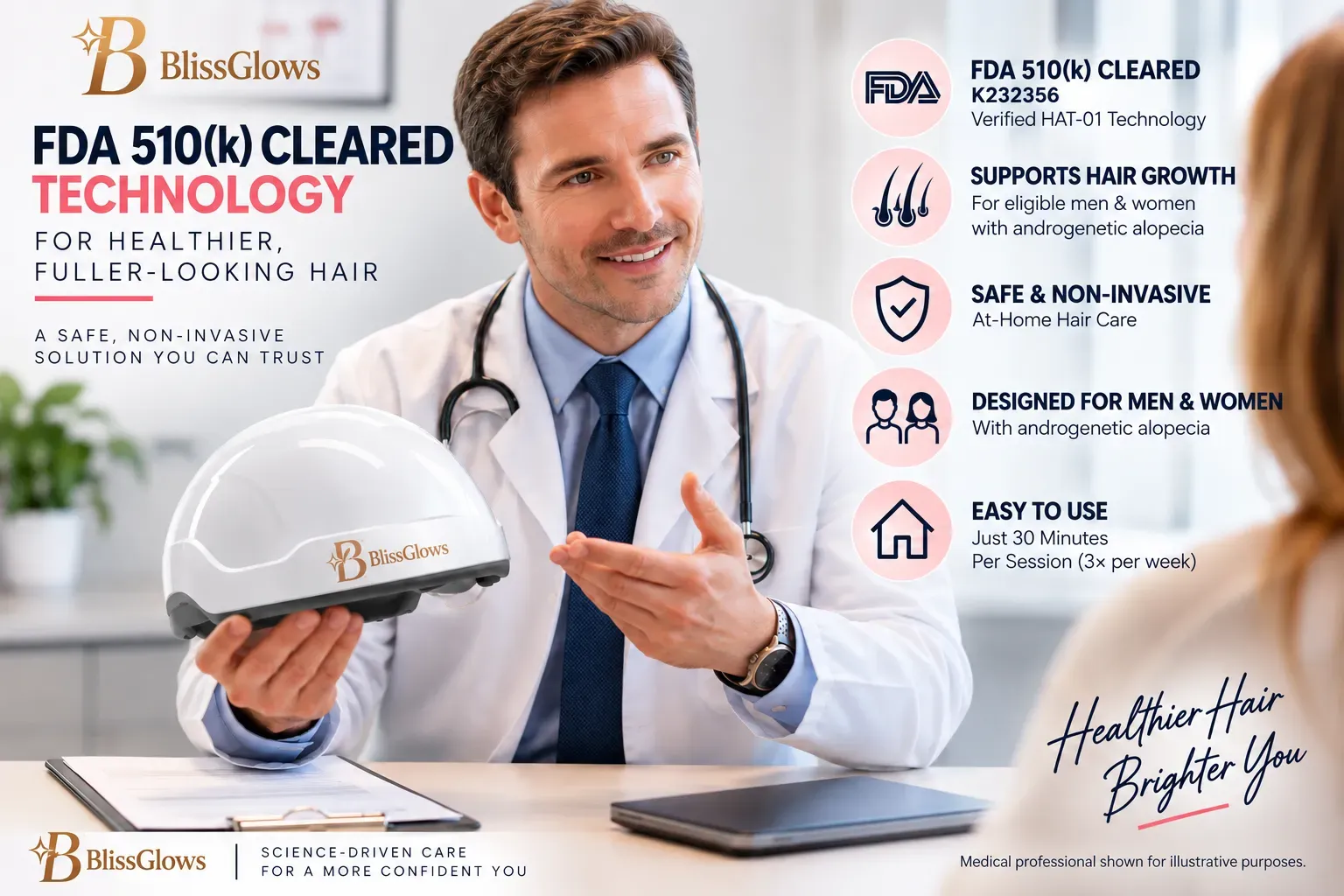
Some low-level laser devices have received FDA 510(k) clearance for specific hair-loss indications.
However, FDA clearance applies to particular devices and intended uses. It should not be interpreted as a guarantee of results for every type of hair loss.
Before choosing a laser hair growth device, compare:
- Laser versus LED technology
- Wavelength and number of diodes
- Recommended treatment schedule
- Manufacturer documentation and FDA clearance, where applicable
- Warranty and customer support
- Safety precautions and contraindications
For more details, read our Laser vs LED Hair Growth Devices Guide .
Explore: BlissGlows LaserRevive™ 82
3. Match the Device to Your Routine and Budget
A more expensive beauty device is not automatically the best choice for your needs.
Consider the total cost, frequency of use, maintenance requirements, cleaning and any accessories or products required for operation.
For facial cleansing, a compact ultrasonic scrubber may be more relevant than a multifunction device.
For hair-thinning concerns, understanding the underlying cause of hair loss should come before choosing a treatment device. A dermatologist can help assess unexplained or persistent hair loss.
4. Seven Questions to Ask Before Buying
- What is the device intended to do? Look for a clearly defined purpose.
- Which technology does it use? Verify the specifications of the exact model.
- What evidence supports its claims? Avoid relying only on dramatic before-and-after marketing images.
- Is the regulatory claim accurate? FDA registered, FDA cleared and FDA approved have different meanings.
- Is it suitable for you? Review contraindications, eye-safety guidance and other precautions.
- How much time does it require? Check treatment frequency, session duration and maintenance.
- What support is available? Review the product-specific warranty, delivery information and return conditions.
5. Explore Beauty Devices by Category
Explore the following BlissGlows devices based on your individual beauty goals.
SkinPure™ — Facial Cleansing
Explore an ultrasonic facial spatula with multiple skincare modes for an at-home cleansing routine.
View SkinPure™ →UltraLift™ — Facial Technology
Explore an at-home multifunction facial device featuring HIFU, RF and EMS technologies.
Explore UltraLift™ →LaserRevive™ 82 — Laser Hair Care
Review the specifications, recommended routine and safety information for this at-home laser hair growth helmet.
Explore LaserRevive™ 82 →ScalpRevive™ — Scalp Care
Discover a scalp-care device combining light-based features, massage and a built-in liquid applicator.
Explore ScalpRevive™ →Frequently Asked Questions
Are at-home beauty devices worth buying?
They may be worthwhile when they address a clear concern, fit your routine and have suitable instructions and supporting evidence. Consider your expectations, budget and the time required for consistent use.
Is LED the same as laser?
No. LEDs and laser diodes produce light differently. Performance also depends on wavelength, power, treatment parameters, intended use and supporting evidence.
Does FDA registration mean FDA approval?
No. FDA establishment registration is not the same as FDA clearance or approval of a specific medical device. Always check which regulatory status applies to the exact model.
Can I combine several beauty technologies?
Do not automatically combine devices or treatments. Follow the safety instructions for each product, including any restrictions on using multiple treatments on the same area.
Which beauty device should I choose first?
Start with the category that matches your main goal, then compare specifications, safety precautions, total cost, ease of use and available support.
Final Thoughts: Choose With Confidence
The right at-home beauty device is not necessarily the one with the most features or the highest price.
Look for transparent specifications, a clearly defined purpose, appropriate safety information and realistic expectations.
Whether you are exploring facial cleansing, skin-firming technology or at-home hair-care devices, take the time to compare your options before making a purchase.
Find Your At-Home Beauty Device
Explore beauty and wellness technology designed for different skincare and hair-care routines.
Explore BlissGlows →Independent Sources and Further Reading
- American Academy of Dermatology — Red Light Therapy
- FDA — Aesthetic and Cosmetic Devices
- FDA — Understanding Device Regulatory Claims
Disclaimer: This guide is for educational purposes only and does not replace professional medical advice. Results and suitability vary by individual and device. Always follow the manufacturer's instructions and consult a qualified healthcare professional when appropriate. BlissGlows sells some of the products linked in this article. Illustrative images do not represent clinical results or medical endorsements.