HIFU vs RF vs EMS: What’s the Difference in At-Home Facial Devices?
HIFU vs RF vs EMS: What’s the Difference in At-Home Facial Devices?
HIFU, radio frequency (RF), and EMS are technologies commonly found in facial beauty devices, but they work in different ways and are designed for different purposes.
Understanding these differences can make it easier to compare at-home facial devices. In this guide, we’ll explain what HIFU, RF, and EMS mean, how these technologies differ, and which specifications and features to consider when choosing a device for your skincare routine.
What Is HIFU Technology in Facial Devices?
What Is HIFU Technology in Facial Devices?
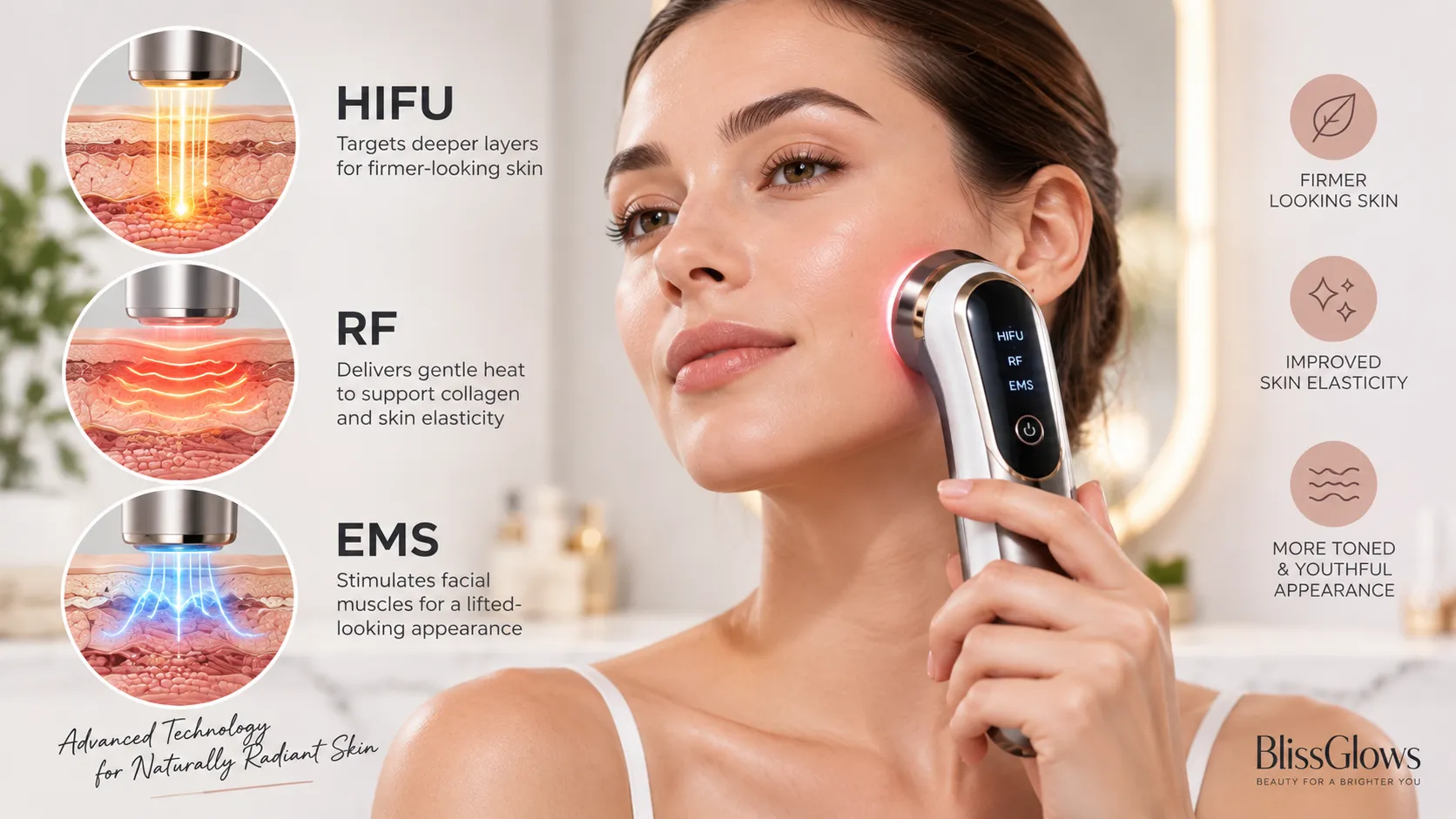
HIFU stands for High-Intensity Focused Ultrasound. The technology uses focused ultrasound energy and is used in certain professional and at-home beauty devices.
HIFU devices can vary significantly in their design, energy settings, treatment areas, and intended use. When comparing at-home facial devices, it is important to check the manufacturer’s specifications and instructions rather than assuming that all HIFU devices operate in the same way.
What Is Radio Frequency (RF) in Facial Devices?
What Is Radio Frequency (RF) in Facial Devices?
Radio frequency (RF) technology uses electromagnetic energy to generate controlled heat within the skin. In facial beauty devices, RF is commonly used as part of skincare routines focused on the appearance of firmness, elasticity, and overall skin texture.
RF devices can differ in frequency, power levels, treatment modes, and recommended usage. Users should always follow the instructions provided for the specific device.
What Is EMS in Facial Devices?
What Is EMS in Facial Devices?
EMS stands for Electrical Muscle Stimulation. In facial beauty devices, EMS uses controlled electrical impulses designed to stimulate facial muscles during use.
EMS is commonly incorporated into devices intended for facial toning and massage routines. The intensity levels, treatment modes, and recommended frequency can vary between devices, so users should follow the manufacturer’s instructions and select settings appropriate for the specific product.
- HIFU: Uses focused ultrasound energy.
- RF: Uses radio frequency energy to generate controlled heat.
- EMS: Uses electrical impulses to stimulate facial muscles.
- Technology: Each works through a different type of energy or stimulation.
- Device Design: Some facial devices use one technology, while multifunction devices may combine several.
- Settings: Intensity levels, modes, and treatment schedules vary depending on the specific device.
- Usage: Always follow the manufacturer’s instructions for the exact model.
Which Is Better: HIFU, RF or EMS for At-Home Facial Care?
Which Is Better: HIFU, RF or EMS for At-Home Facial Care?
There is no single technology that is automatically better for every at-home facial care routine. HIFU, RF, and EMS work differently, which is why the right choice depends on the device, its specifications, and the features you are looking for.
HIFU uses focused ultrasound energy, RF uses radio frequency energy to generate controlled heat, and EMS uses electrical impulses for muscle stimulation. Some multifunction facial devices combine these technologies so users can access different treatment modes within a single device.
When comparing products, consider the technologies included, available intensity levels, treatment areas, recommended usage, ease of use, and the manufacturer’s instructions rather than choosing a device based on one technology alone.
What Should You Look for in a Multifunction Facial Device?
What Should You Look for in a Multifunction Facial Device?
- Technologies Included: Check whether the device offers HIFU, RF, EMS, or other complementary modes.
- Adjustable Settings: Look for different intensity levels or treatment modes.
- Treatment Areas: Check which areas of the face or neck the device is designed to be used on.
- Ease of Use: Consider the controls, size, weight, and overall design.
- Treatment Schedule: Follow the recommended session duration and frequency for the specific device.
- Safety Instructions: Review contraindications, precautions, and the manufacturer’s instructions before use.
An Example: BlissGlows UltraLift™ HIFU RF EMS Facial Device
An Example: BlissGlows UltraLift™ HIFU RF EMS Facial Device
The BlissGlows UltraLift™ is an at-home multifunction facial device that combines HIFU, radio frequency (RF), and EMS technologies within a single beauty tool.
Its multiple treatment modes allow users to incorporate different technologies into their facial care routine without needing several separate devices. Depending on the selected mode, the device provides access to ultrasound, radio frequency, and electrical muscle stimulation technologies.
For consumers comparing multifunction facial devices, UltraLift™ provides an example of how HIFU, RF, and EMS technologies can be combined in one compact device designed for at-home facial care.
Frequently Asked Questions About HIFU, RF and EMS Facial Devices
Frequently Asked Questions About HIFU, RF and EMS Facial Devices
What Is the Main Difference Between HIFU, RF and EMS?
What Is the Main Difference Between HIFU, RF and EMS?
Can HIFU, RF and EMS Be Combined in One Facial Device?
Can HIFU, RF and EMS Be Combined in One Facial Device?
Is RF the Same as HIFU?
Is RF the Same as HIFU?
What Does EMS Do in a Facial Beauty Device?
What Does EMS Do in a Facial Beauty Device?
How Often Should You Use a HIFU, RF or EMS Facial Device?
How Often Should You Use a HIFU, RF or EMS Facial Device?
Understanding HIFU, RF and EMS for Your At-Home Facial Care Routine
Understanding HIFU, RF and EMS for Your At-Home Facial Care Routine
HIFU, RF, and EMS are different technologies that can be found in modern facial beauty devices. Understanding how each technology works can make it easier to compare products and identify the features that best fit your at-home skincare routine.
Rather than focusing on a single technology, consider the complete device, including its treatment modes, adjustable settings, recommended usage, comfort, and safety instructions. Multifunction devices can offer a convenient way to access several beauty technologies within one at-home facial care tool.