What Is a Laser Hair Growth Helmet? How At-Home Laser Hair Therapy Works
What Is a Laser Hair Growth Helmet? How At-Home Laser Hair Therapy Works
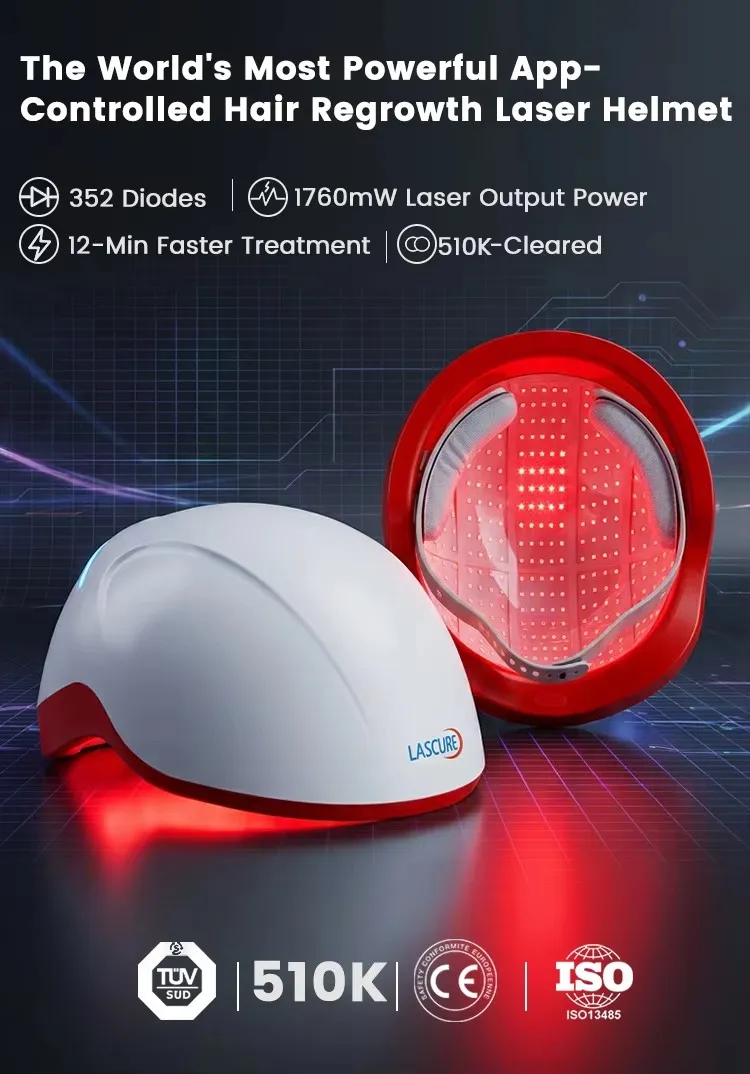
Laser hair growth helmets are at-home devices designed to deliver low-level laser therapy (LLLT) across the scalp. Unlike handheld devices that require you to move the treatment area manually, a helmet provides hands-free coverage while multiple laser diodes deliver light at specific wavelengths to the scalp.
In this guide, we’ll explain how laser hair growth helmets work, what 650nm laser technology means, how laser devices differ from LED-based devices, and what you should look for when choosing an at-home hair growth device.
How Does a Laser Hair Growth Helmet Work?
How Does a Laser Hair Growth Helmet Work?
Laser hair growth helmets use low-level light therapy to expose the scalp to controlled wavelengths of light. The goal is to deliver light energy across areas of the scalp in a consistent and hands-free way.
Many devices use red light in the 600–700nm range. Some systems use laser diodes, while others use LEDs or a combination of both technologies. Because device specifications can vary significantly, it is important to look beyond the appearance of the helmet and examine the type of light source, wavelength, number of diodes, treatment schedule, and regulatory status of the specific device.
What Does 650nm Mean in Laser Hair Growth Devices?
What Does 650nm Mean in Laser Hair Growth Devices?
The term 650nm refers to the wavelength of red light emitted by a laser device. Nanometers (nm) are used to measure wavelengths of light, and 650nm falls within the visible red-light spectrum.
In hair-growth devices, wavelength is only one specification to consider. The type and number of light sources, power output, treatment duration, scalp coverage, and design of the device can all differ from one model to another.
For this reason, consumers comparing laser hair growth helmets should review the specifications of the exact device rather than assuming that all products using 650nm technology provide the same configuration or treatment protocol.
Laser vs. LED Hair Growth Devices: What's the Difference?
Laser vs. LED Hair Growth Devices: What's the Difference?
Laser and LED devices can both emit red light, but they use different types of light sources. Laser diodes produce a more concentrated and directional beam of light, while LEDs generally produce a broader and more dispersed light output.
Some hair-care devices use only laser diodes, some use LEDs, and others combine both technologies. When comparing products, check whether the stated diode count refers specifically to lasers, LEDs, or a combination of the two.
What Should You Look for When Choosing a Laser Hair Growth Helmet?
What Should You Look for When Choosing a Laser Hair Growth Helmet?
- Light Source: Check whether the device uses laser diodes, LEDs, or a combination of both.
- Wavelength: Look for the stated wavelength, commonly expressed in nanometers (nm).
- Diode Count: Consider how many light sources are distributed across the treatment area.
- Scalp Coverage: A helmet-style design can provide convenient hands-free coverage across multiple areas of
- Treatment Schedule: Check the manufacturer's recommended session duration and weekly frequency.
- Cordless Design: Rechargeable models can make regular at-home sessions more convenient.
- Regulatory Status: If a product claims FDA 510(k) clearance, verify the clearance number and make sure it
What Does FDA 510(k) Clearance Mean?
What Does FDA 510(k) Clearance Mean?
In the United States, some laser hair growth devices are marketed under an FDA 510(k) clearance. A 510(k) clearance means that the FDA has reviewed a premarket submission and determined that the device is substantially equivalent to a legally marketed predicate device for its intended use.
This should not be confused with the term “FDA approved.” When evaluating a laser hair growth device, consumers can look for the specific 510(k) number and review the corresponding FDA documentation.
An Example: BlissGlows LaserRevive™ 82
An Example: BlissGlows LaserRevive™ 82
The BlissGlows LaserRevive™ 82 is an at-home laser hair growth helmet featuring 82 laser diodes operating at a wavelength of 650nm ±5nm. Its hands-free, cordless design allows users to incorporate laser hair therapy into a convenient at-home routine.
The device features a rechargeable 3800mAh battery, continuous and pulse operating modes, and a 30-minute treatment session. The manufacturer's recommended schedule is three sessions per week.
For shoppers comparing at-home laser hair growth helmets, LaserRevive™ 82 provides an example of a device combining dedicated laser diodes, hands-free scalp coverage, cordless operation, and a structured treatment schedule.
How Often Should You Use a Laser Hair Growth Helmet?
How Often Should You Use a Laser Hair Growth Helmet?
Treatment schedules vary depending on the device, so users should always follow the manufacturer’s instructions for their specific model. Some at-home laser hair growth helmets are designed for several sessions per week rather than daily use.
Consistency is an important part of any at-home routine. Using a device more frequently or for longer sessions than recommended does not necessarily produce better results. Always follow the recommended treatment schedule and safety instructions provided with your device.
Frequently Asked Questions About Laser Hair Growth Helmets
Frequently Asked Questions About Laser Hair Growth Helmets
Do Laser Hair Growth Helmets Use Lasers or LEDs?
Do Laser Hair Growth Helmets Use Lasers or LEDs?
What Does 650nm Mean in a Laser Hair Growth Helmet?
What Does 650nm Mean in a Laser Hair Growth Helmet?
How Often Should You Use a Laser Hair Growth Helmet?
How Often Should You Use a Laser Hair Growth Helmet?
What Does FDA 510(k) Clearance Mean for a Hair Growth Device?
What Does FDA 510(k) Clearance Mean for a Hair Growth Device?
Making an Informed Choice for Your At-Home Hair Care Routine
Making an Informed Choice for Your At-Home Hair Care Routine
Laser hair growth helmets offer a convenient, hands-free way to incorporate light-based technology into an at-home hair care routine. However, not all devices are built the same. Comparing the light source, wavelength, diode count, treatment schedule, design, and regulatory information can help you better understand the differences between available options.
If you're considering an at-home laser hair growth device, take the time to review the specifications and instructions for the exact model before making your choice.